
What Are Limited and Unlimited Contracts in UAE Law? (2026 Guide)
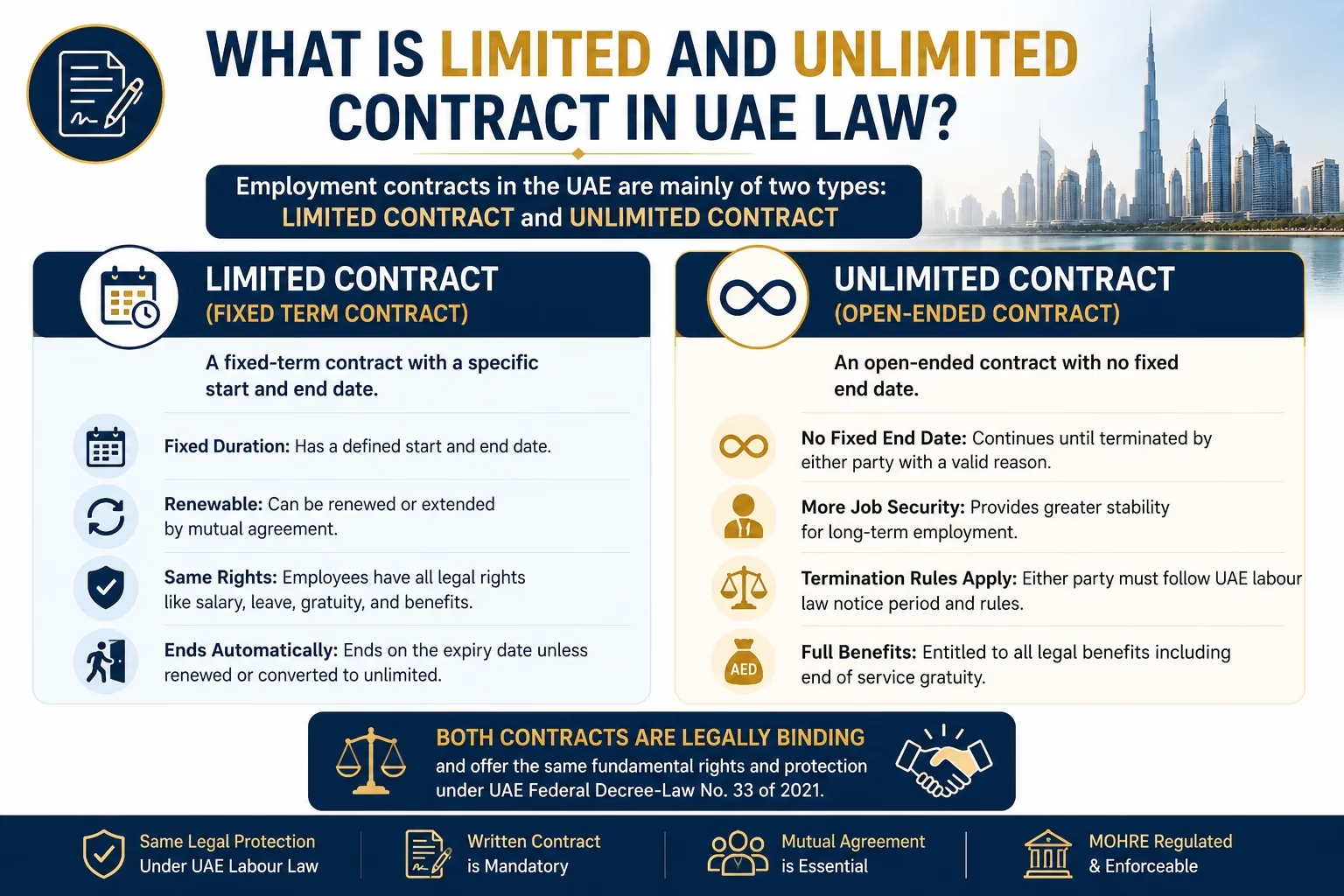
Under the current UAE Labour Law, private-sector employment contracts are generally fixed-term contracts. The old unlimited-contract model was phased out when Federal Decree-Law No. 33 of 2021 took effect on 2 February 2022, with the transition period for legacy contracts later extended to 31 December 2023.
This guide explains what limited and unlimited contracts meant, what changed under the current framework, how contract duration works today, and what to check if an older employment document still uses the word “unlimited.” If you are also checking your end-of-service entitlement, see our UAE Gratuity Calculator.
Limited vs Unlimited Contract UAE at a Glance
| Feature | Limited (Fixed-Term) | Unlimited (Old, Historical) |
|---|---|---|
| Available for new hires today | Yes, under the current federal private-sector framework | No, the old unlimited-contract model was phased out from 2 February 2022 |
| Has a fixed end date | Yes, the contract is concluded for a specified term | No, it had no fixed end date |
| Used after February 2022 | Yes, fixed-term contracts form the current framework | No for new employment; legacy contracts were subject to the transition to fixed-term contracts |
| Historical resignation gratuity reduction | Not applicable under the current contract framework | Historical rules could reduce gratuity on resignation depending on the circumstances and length of service |
| Notice period | Generally 30–90 days under the employment contract; separate rules apply during probation | Notice requirements varied under the previous labour-law framework |
What Are Limited and Unlimited Contracts in UAE Employment Law?
Historically, private sector employees in the UAE were hired under one of two contract types, and understanding both still helps explain why today’s system looks the way it does.
What Is a Limited Contract?
A limited contract, also called a fixed term contract, has a clear start date and end date written into the agreement. Both parties know exactly when the term expires, and the contract can be renewed or extended by mutual agreement once it ends. Historically, this was one of the two main private-sector contract types. Under the current federal framework, employment contracts are fixed-term.
What Is an Unlimited Contract?
An unlimited contract, sometimes called an open ended contract, had a start date but no fixed end date. Either party could end it by serving the notice period set out in the agreement, and it would otherwise continue indefinitely. This contract type was phased out for new private-sector employment under the current federal framework.
Why Unlimited Contracts No Longer Exist
Federal Decree-Law No. 33 of 2021 removed the unlimited contract model entirely for private sector employees, effective 2 February 2022. Under a transitional provision in the law, any unlimited contract already in place had to be converted into a fixed term contract within a set transition period. MOHRE initially set a deadline of 1 February 2023, then extended it to 31 December 2023 through Ministerial Resolution No. 27 of 2023, giving employers extra time to update their records.
For MoHRE-regulated private-sector employment, the transition period for legacy unlimited contracts ended on 31 December 2023. If an older printed contract or HR document still says “unlimited,” do not assume that the old wording alone determines your current status. Check the employment record registered with the relevant authority and clarify any mismatch.
Your Old Contract Still Says “Unlimited”
Suppose you joined a UAE private-sector company before February 2022 and your old paper contract still says “unlimited.” In 2026, the important question is whether your current employment record reflects the applicable fixed-term framework.
For MoHRE-regulated employment, check the contract registered with MoHRE rather than relying only on an older printed copy. If you work under a separate free-zone employment framework, check the records maintained by the relevant authority and clarify any mismatch.
Old Law Reference
Since older content sometimes cites specific article numbers from the repealed 1980 law, here is a quick cross reference for the topics covered on this page.
| Topic | Old Law (Federal Law No. 8 of 1980) | Current Law (Federal Decree-Law No. 33 of 2021) |
|---|---|---|
| Unlimited contract resignation reduction | Historical rules could affect gratuity when an employee resigned from an unlimited contract. | The old unlimited-contract reduction system is no longer the general rule for current employment; transitional provisions may matter for historical employment periods. |
| Contract type options | Limited and unlimited contracts were both available. | Employment contracts are concluded for a specified period, subject to renewal by agreement. |
| Transition rule for existing unlimited contracts | Not applicable under the old contract framework. | Existing unlimited contracts were subject to transitional rules requiring conversion to fixed-term contracts. |
Working for a Second Employer or Family Sponsorship
Contract duration alone does not determine whether an employee can work for another employer or work while sponsored by a family member. The relevant work-permit and employment requirements must be met for the specific arrangement.
If you are considering a second job or working under family sponsorship, check the permit requirements applicable to your situation rather than relying on whether your primary contract is described as limited or unlimited.
What Happened to My Old Unlimited Contract?
If you were hired before February 2022 under an unlimited contract, your employer was legally required to convert your agreement into a fixed term contract by the end of 2023. The change primarily concerned the employment contract framework. Other documents, permits and immigration records may have their own validity periods, so they should be checked separately rather than assuming that all dates changed or remained unchanged with the contract.
Some employees still hold onto an old physical copy that says unlimited, and understandably assume the old rules still apply to them. An old printed document should not, by itself, be treated as proof that the historical unlimited-contract rules still govern the current employment relationship. If you work in a free zone, check the records maintained by the relevant free-zone authority as well.
How to Check If Your Contract Is Limited or Unlimited
You can confirm your current contract status directly through MOHRE rather than relying on old paperwork.
- Access your employment contract: Use the official MOHRE service or available MOHRE channels to access your registered employment contract. The information required can vary by service.
- Check your contract details: Look for the contract type, start date, end date and other employment details shown in your registered contract.
- Compare it with your documents: Compare the registered contract with your signed copy and any renewal or amendment documents issued by your employer.
- Raise any inconsistency: If the registered information differs from your documents or what your employer has told you, ask your employer or MOHRE to clarify the current record.
What Employment Contract and Work Models Exist in the UAE Today?
One important point is that contract duration and work arrangement are not the same thing. Under the current private-sector framework, the employment contract is generally fixed-term, while the work arrangement can vary.
Full-time
Under this arrangement, an employee works for one employer on a full-time basis.
Part-time
An employee works for one or more employers for a specific number of hours or days.
Temporary Work
The employee works on a specific assignment, with the contract ending when the assignment is completed.
Flexible Work
Working hours or days may change depending on the employer’s business needs and operating conditions.
Remote Work
All or part of the employee’s work is performed outside the usual workplace.
Job Sharing
Job tasks and duties are divided between employees according to an arrangement agreed in advance.
UAE Government currently lists full-time and part-time employment contracts and temporary, flexible, remote and job-sharing work arrangements.
What Must a UAE Employment Contract Include?
A UAE private-sector employment contract should clearly set out the main terms of the employment relationship. These include the employee’s start date, type of work, workplace, applicable terms and conditions, contract duration and salary.
The employment process normally starts with a job offer, followed by signing the employment contract and obtaining the required work permit. Employees should compare the final contract with the agreed job offer and keep a copy of the signed documents.
You can also check your UAE Labour Card status and details separately from your employment contract.
Official UAE Government guidance describes the private-sector process as job offer → employment contract → work permit and identifies key contract details such as start date, type of work, workplace, duration and salary.
Contract Duration: Is There Still a Cap?
The original version of Federal Decree-Law No. 33 of 2021 included a three-year limit for fixed-term contracts. Federal Decree-Law No. 14 of 2022 amended Article 8(3), removing that three-year ceiling from the provision.
Under the amended framework, an employment contract must still be concluded for a specified period and may be renewed by agreement between the parties. The amended Article 8(3) no longer states a three-year maximum.
MOHRE guidance also states that the law does not prescribe a maximum duration for the employment contract.
Some employers may still use one-, two- or three-year terms in their contracts based on their own employment arrangements. Therefore, the fact that a contract has a three-year term does not mean that three years is the maximum period permitted by the current federal provision.
What Happens When a Fixed Term Contract Ends Without Renewal
If both parties simply continue working past the stated end date without signing a new agreement, the law treats this as an implied renewal under the same original terms. This protects employees from suddenly losing their job status purely because paperwork was not updated on time, though it is still better practice for both sides to formally renew or extend in writing.
Resignation and Notice Period: Old Rules vs Current Rules
Under the old unlimited contract system, resigning early could reduce your gratuity through the one third and two thirds rules, and notice periods sometimes differed depending on which side initiated the termination. Under the current fixed-term framework, the historical unlimited-contract gratuity reductions no longer apply as the general rule. Current termination and notice requirements are governed by the applicable provisions of the UAE Labour Law.
| Situation | Old Unlimited Contract Rules | Current Fixed-Term Rules |
|---|---|---|
| Notice period | Notice requirements varied under the old rules and depended on the circumstances of termination. | Usually 30–90 days under the employment contract. Separate notice rules apply during probation. |
| Ending employment before the stated term | Not applicable because an unlimited contract did not have a fixed end date. | Either party can generally terminate the employment relationship by giving the required notice. Compensation may apply if the required notice is not served. |
| Gratuity on resignation | Under the old rules, resignation before completing five years could result in a reduced gratuity entitlement, depending on the length of service. | The old limited-vs-unlimited resignation reductions no longer apply to current employment under the UAE Labour Law. |
If you resign before your current fixed-term contract ends, the legal consequences depend on the reason for termination, the notice given and the circumstances of the case. Under the current framework, either party may generally terminate the employment relationship by giving the required notice, subject to the applicable legal conditions. Compensation can arise where the required notice is not served or where another specific legal or contractual obligation applies.
Documents Worth Checking Before You Assume Your Contract Type
Since so much confusion comes from outdated paperwork, a quick document check can settle the question faster than guessing.
- Your current employment contract: Check the contract registered with MoHRE, where applicable, and compare it with your signed copy for any differences in contract type, duration or other key terms.
- Your work permit or labour card: Check the validity of your current work permit separately from the duration stated in your employment contract.
- Renewal or amendment documents: Keep any contract renewal, extension or amendment issued by your employer, especially documents issued after the 2022 labour-law changes.
- Free-zone employment records: If you work in a free zone with a separate employment framework, check the contract and employment records maintained by the relevant free-zone authority.
If any of these disagree with what HR has told you verbally, raise it in writing and ask for written confirmation of your current contract type and term.
Gratuity Under Limited vs Unlimited Contracts
Many people search for “unlimited contract gratuity calculation UAE” or “gratuity calculation for limited contract in UAE” expecting the two contract labels to produce different formulas today. For covered full-time private-sector employees under the current rules, end-of-service gratuity is generally calculated using the basic salary and length of continuous service, rather than a separate limited-versus-unlimited formula.
For a full-time worker who has completed at least one year of continuous service, the current UAE Government guidance provides 21 days of basic salary for each year of service during the first five years and 30 days for each year after the first five, subject to the statutory two-year maximum. Different rules can apply to part-time and other work arrangements.
Common Mistakes People Make
Most confusion in this niche comes from outdated content still circulating from before 2022, rather than anything genuinely ambiguous in the current law.
- Assuming an old unlimited contract still applies: Do not assume that an older contract remains unlimited simply because the original paperwork was never replaced. Check the current employment record with the relevant authority.
- Using old gratuity reductions as current rules: Do not quote the historical one-third or two-thirds resignation reductions as if they still apply to current employment.
- Repeating the old three-year cap: The original three-year statutory ceiling was removed by the 2022 amendment to Article 8(3). Do not present the old three-year limit as the current wording of the law.
- Assuming all free-zone employees follow the same framework: Free-zone employment can involve separate authorities and employment frameworks, so check the rules and records applicable to your workplace.
- Confusing work-permit validity with contract duration: A work permit or labour card record and the employment contract can contain different dates and should be checked separately.
- Relying only on a verbal explanation: If there is a disagreement about your contract type or duration, check the relevant registered employment record and supporting documents rather than relying only on a verbal HR explanation.
- Looking for a gratuity difference based only on the contract label: For current employment, gratuity should be assessed under the applicable end-of-service rules rather than assuming that the words “limited” or “unlimited” automatically determine the entitlement.
Checking your own MOHRE record directly can resolve many of these questions faster than relying on secondhand explanations from colleagues or older articles.
Benefits of Unlimited Contracts (Historical)
Unlimited contracts are no longer part of the current federal private-sector contract framework, so their advantages are now mainly historical.
An unlimited contract did not have a fixed end date, which meant the employment relationship could continue without negotiating a new fixed end date at the end of each contract term. However, resignation-related gratuity rules under the previous labour-law framework could affect an employee’s end-of-service entitlement depending on the circumstances and length of service.
These historical rules should not be used to determine the gratuity entitlement of a current employee covered by the UAE Labour Law.
Editorial Review & Sources
Reviewed by: Gratuity Calculator UAE Team
Sources referenced: UAE Government guidance on employment contract duration and work models, Federal Decree-Law No. 33 of 2021 on the Regulation of Employment Relationships, Federal Decree-Law No. 14 of 2022 amending the employment law, and Ministerial Resolution No. 27 of 2023.
Official Reference: UAE Government – Employment Contracts: Duration and Models
Last reviewed against official UAE Government and MOHRE guidance: September 2026. This page provides general information only and does not replace confirmation of your specific employment record with the relevant authority or advice from a qualified labour lawyer.
Frequently Asked Questions
Can I still sign an unlimited contract in the UAE today?
No. Under the current federal private-sector framework, employment contracts are fixed-term. The old unlimited-contract model was phased out when Federal Decree-Law No. 33 of 2021 took effect on 2 February 2022.
What is the difference between a limited and unlimited contract now?
For current MoHRE-regulated private-sector employment, the practical distinction is mainly historical because the current framework uses fixed-term contracts. The limited-versus-unlimited distinction remains relevant when reviewing older contracts, previous employment periods or historical disputes.
Do I get less gratuity if I resign from a fixed-term contract?
Not simply because the contract is fixed-term. Under the current UAE Labour Law, the old resignation-based gratuity reductions associated with the previous contract system do not apply to current employment. End-of-service entitlement is subject to the applicable legal eligibility requirements and the employee’s service details.
How do I know if my old unlimited contract was converted?
For MoHRE-regulated employment, check your current registered employment contract through the available MoHRE channels and compare it with your older paperwork. If the records do not match, ask your employer or MoHRE to clarify which contract details are currently registered.
Is there still a maximum length for a fixed-term contract?
The original three-year statutory ceiling was removed by the 2022 amendment to Article 8(3). Under the amended framework, the contract still has a specified term agreed by the parties, while the amended provision no longer states a three-year maximum. MoHRE guidance also states that the current law does not prescribe a maximum contract duration.
Do the same rules apply if I work in a free zone?
Not necessarily. The federal UAE Labour Law applies to covered private-sector employment, while some free zones have their own employment authorities or legal frameworks. If you work in a free zone, check the rules and employment records applicable to your specific authority before relying on the federal rules described in this guide.
Can I resign from a fixed-term contract before its end date?
Either party may generally terminate an employment contract for a legitimate reason by giving the required written notice. Under the current federal rules, the notice period is generally between 30 and 90 days. If the required notice is not served, notice-period compensation may be payable. Separate rules can apply during probation.
How can I check whether my contract records are correct?
Compare your current registered employment contract with your signed employment documents and any renewal or amendment records issued by your employer. Check important details such as the contract type, duration, job information and other agreed terms. If there is a mismatch, ask the relevant employment authority or your employer to clarify the record.