
Overtime Calculation in UAE: Rates and Formula for 2026
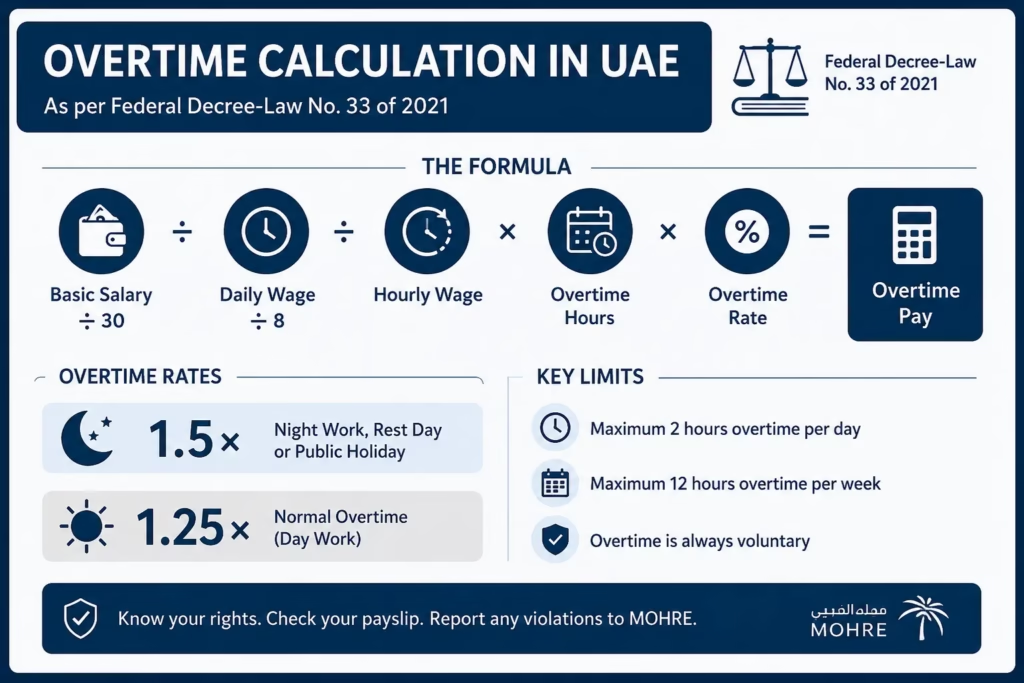
Overtime calculation in UAE comes down to one core formula, basic salary divided by 30, then by 8, multiplied by your overtime hours and the correct rate, either 1.25 or 1.5 depending on when you worked. Federal Decree-Law No. 33 of 2021 sets these rules, and getting the rate wrong is one of the most common payroll disputes employees raise with MOHRE. This page walks through the formula, the rates, and the limits so you can check your own payslip.
Need your gratuity too? Use our Gratuity Calculator UAE for your full end of service estimate.
The Overtime Calculation in UAE Formula
The standard three step formula works the same way for every basic salary.
Worked Example
Worked Overtime Example
An employee with a basic salary of AED 6,000 works 2 extra hours on a regular weekday.
Daily Basic Wage
AED 6,000 ÷ 30 = AED 200
Hourly Wage
AED 200 ÷ 8 = AED 25
Overtime Pay
AED 25 × 2 hours × 1.25 = AED 62.50
Night Overtime Comparison
If those same 2 hours fell between 10pm and 4am instead, the rate becomes 1.5, giving AED 75 instead of AED 62.50.
Overtime Pay Rates
| Situation | Rate | What It Means |
|---|---|---|
| Regular daytime overtime | 1.25 (25% extra) | Standard rate for extra hours during normal working periods |
| Night overtime, 10pm to 4am | 1.5 (50% extra) | Higher rate for hours worked overnight |
| Working on your weekly rest day | 1.5, or a substitute day off | Employer can choose either option |
Overtime is calculated on basic salary only, the same way gratuity is. Housing, transport, and other allowances are excluded from the hourly rate calculation, even though your total monthly pay is higher.
Legal Limits on Overtime
Under Federal Decree-Law No. 33 of 2021, standard working hours are 8 hours a day or 48 hours a week. Overtime is generally capped at 2 hours per day, except in specific cases where extra work is needed to prevent loss or serious damage to the business. Employees in senior executive, managerial, or similar decision making roles are typically exempt from standard overtime entitlements, since their positions are treated differently under the law.
Ramadan Working Hours
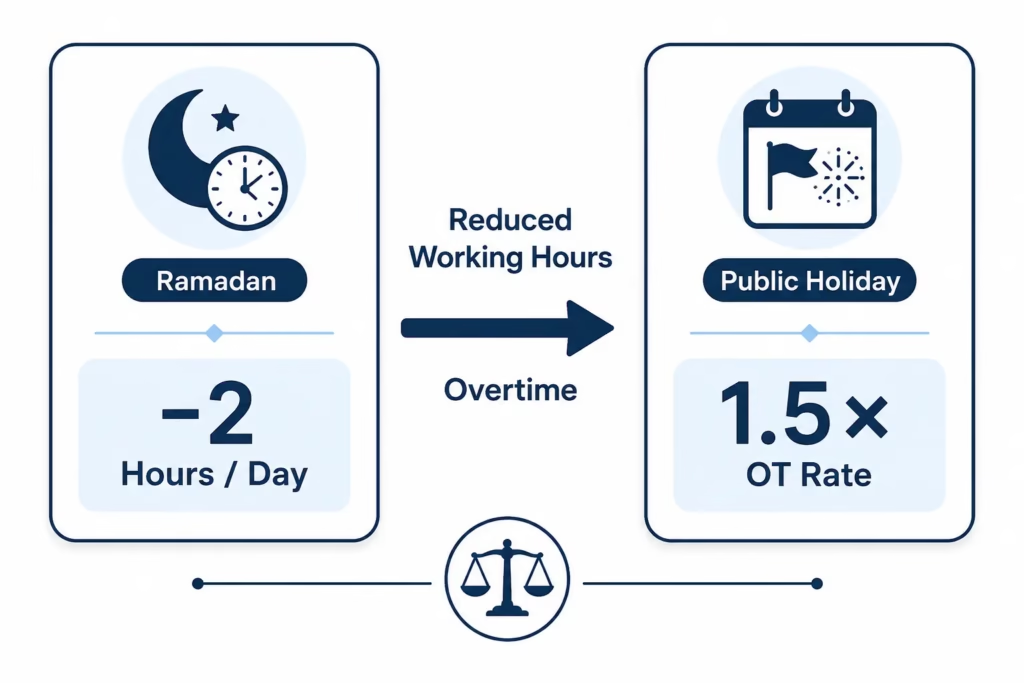
During Ramadan, standard working hours are reduced by 2 hours a day for all employees, regardless of religion. Overtime calculated during Ramadan generally uses the same 1.25 and 1.5 rate structure, applied to the reduced daily hour baseline rather than the standard 8 hour day.
Overtime on Public Holidays
If you are required to work on an official public holiday, you are generally entitled to either a substitute day off or pay at the higher 1.5 rate, similar to the rest day rule. Confirm which option your employer is applying, since this affects both your take home pay and your remaining leave balance.
Overtime Calculation in UAE: Basic Salary or Gross Salary?
Overtime uses your basic salary only, not your gross monthly package. This is the same principle used for gratuity, and it is one of the most common sources of confusion, since employees sometimes calculate their hourly rate using their full salary including allowances, which produces an inflated figure that does not match what payroll actually pays out.
Common Mistakes People Make
Who Is Exempt From Overtime Rules
Not every role in the UAE qualifies for standard overtime pay. Employees in senior executive positions, those with supervisory or managerial authority over other staff, and certain specialized roles such as naval or marine crew are generally treated differently under the law, since their positions often involve flexible hours that do not map cleanly onto a standard 8 hour day. If your job title suggests a managerial or executive role, check your employment contract directly rather than assuming standard overtime rules automatically apply.
Shift Based Roles
Employees working on a formal shift system, common in sectors like retail, hospitality, and security, are sometimes subject to different overtime handling than employees on a standard single shift schedule. The underlying principle, basic salary as the calculation base and the 1.25 or 1.5 multiplier, still applies, but how hours are tracked and totaled can differ depending on the shift pattern your employer uses.
How to Check Your Overtime Was Calculated Correctly
Since payroll errors are one of the most common sources of dispute in this area, it helps to verify your own numbers periodically rather than assuming your payslip is automatically correct.
If the numbers do not match, raise it with HR first, and escalate to a MOHRE complaint if the discrepancy is not resolved directly.
Duty Time and On Call Arrangements
Some employees, particularly in security, facilities, and healthcare support roles, are placed on duty time or on call arrangements rather than a fixed shift. Whether on-call hours count as overtime depends heavily on whether the employee is required to remain at the workplace or simply reachable, and this is often addressed specifically in the employment contract rather than the general labor law provisions. If your role involves on-call duty time, review your contract’s specific wording on this point, since general overtime rules do not always map directly onto standby arrangements.
Recording and Proving Overtime Hours
Disputes over overtime often come down to whether the hours were actually documented anywhere, rather than a disagreement about the rate itself. Keeping your own simple log, noting the date, start and end time, and reason for any extra hours worked, gives you something concrete to reference if your payslip does not match what you expect.
What to Do If Your Employer Disputes Your Hours
If your employer’s records show fewer overtime hours than you believe you actually worked, raise the discrepancy in writing first, referencing specific dates and any evidence you have, such as messages, sign in records, or witnesses. If this does not resolve the issue, a MOHRE labour complaint is the standard next step, and having a written record from the start makes that process considerably smoother.
Overtime for Part Time and Flexible Contracts
Employees on part time or flexible work arrangements are also entitled to overtime protections when they exceed their agreed contracted hours, though the baseline hours used to calculate what counts as overtime differ from the standard full time 8 hour day. Confirm your specific contracted hours figure with your employer, since this is the actual reference point your overtime calculation should use, not the standard full time baseline.
Editorial Review & Sources
Reviewed by: Gratuity Calculator UAE Team
Sources referenced: Federal Decree-Law No. 33 of 2021 on the Regulation of Employment Relationships, Articles 17 and 19, official MOHRE guidance.
Official Reference: UAE Government – Working Hours
Last verified against official MOHRE and u.ae guidance: July 2026. This page provides general information only, and is not a substitute for confirming your specific overtime entitlement with MOHRE or your employer’s HR team.